
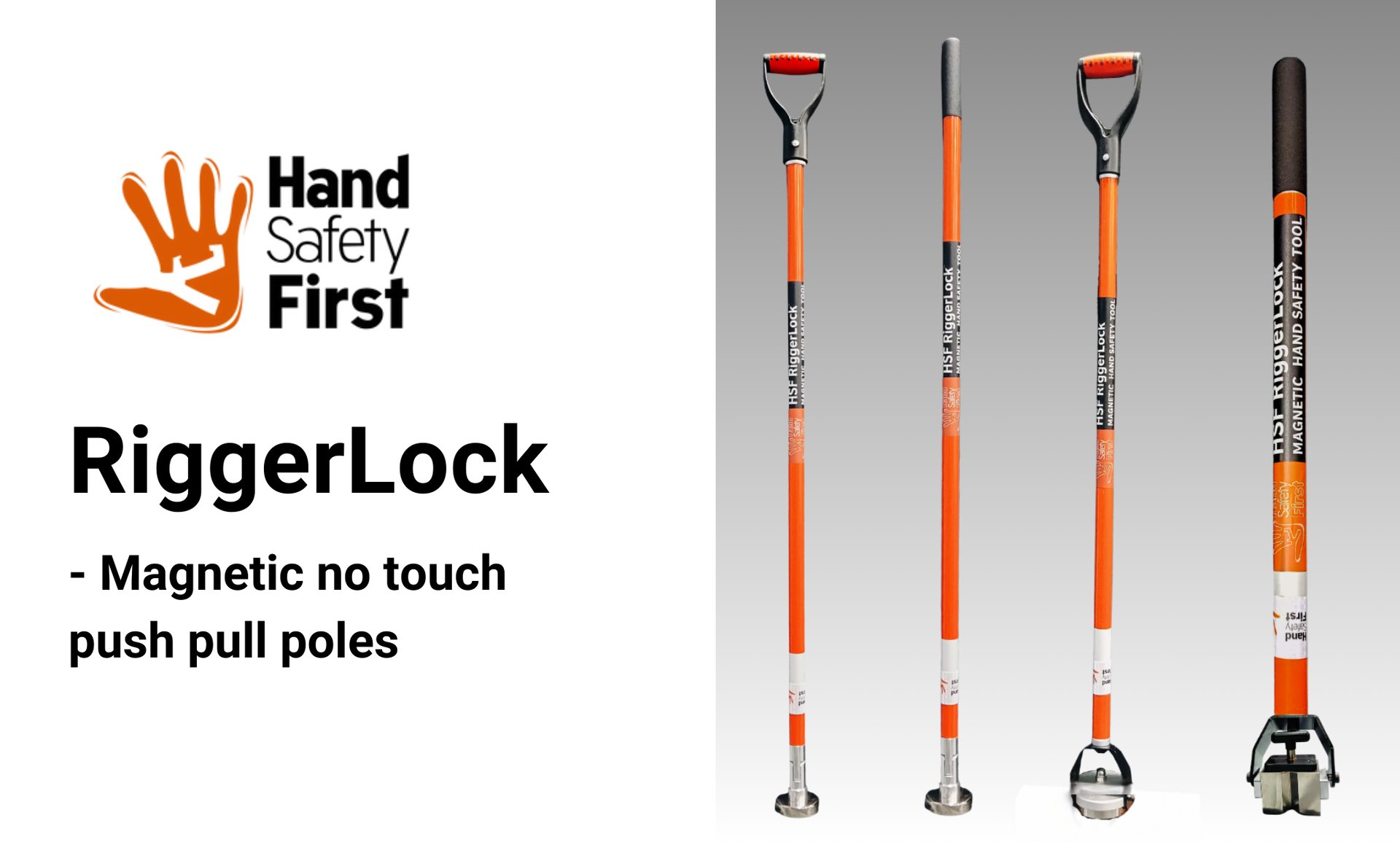
Why magnetic No‑Touch Push Pull Poles are needed
Magnetic no‑touch push pull poles exist to solve one core problem: people naturally want to “help” a load by touching it. Any time a worker grabs a beam, plate, pipe, sling, or hook, they put their body directly in the danger zone. The pole breaks that habit by giving a better, safer way to do the same job.
A magnetic pole extends the operator’s reach and replaces their hand as the point of contact. Instead of the hand being the last link in the chain between the person and the moving load, the tool becomes that link. This changes the risk profile of common tasks—guiding, stopping, rotating, or nudging a load—from high risk to much lower risk, without adding complex procedures or equipment.
These tools are also important because many high‑risk tasks are repetitive and routine: landing a load, sliding a plate, rolling a pipe on a rack. People tend to underestimate the danger of tasks they perform every day. A dedicated tool serves as a constant, physical reminder that “hands do not belong here,” and makes the safer method faster than the unsafe one.
Problems they solve
1. Hand and finger crush injuries
Crush injuries usually happen in fractions of a second when something shifts unexpectedly. Typical scenarios include:
A suspended load swings and pins fingers between the load and a structure.
A beam or plate being “walked” into position drops a few centimeters and traps hands underneath.
A worker holds a flange or bracket near a mating surface and it suddenly slips or is pulled tight.
With a magnetic no‑touch pole, hands never need to be in these squeeze points. The magnet attaches to the steel surface; the pole is what gets trapped or hit if something moves. Even if the magnet slips, the operator is holding the insulated handle at a distance, not the load itself.
2.Struck‑by and swing hazards
When a load hangs from a crane hook or hoist, it behaves like a pendulum. Even a small bump, wind, or sudden stop can start it swinging. If someone stands close and tries to catch or grab it:
They can be hit directly by the load.
Their hand can be pulled or twisted as they try to hold on.
They may lose balance and fall from a height or into another hazard.
Using a pole gives them leverage and distance. The contact point is further from their body, so the same swing results in a much smaller impact on them. They can stand slightly off‑line from the load path, use the pole to guide the swing, and let the tool absorb minor impacts instead of their body.
3.Awkward postures and ergonomic strain
Many positioning tasks require reaching into gaps, over handrails, or across trailers. Workers:
Twist their backs while pushing or pulling.
Overreach with arms extended, reducing strength and control.
Climb onto loads, racks, or pallets to reach a better position.
Over time, this leads to back, shoulder, and wrist injuries. In the short term, it makes them less able to react quickly if something goes wrong. A properly sized pole reduces this:
The worker can stand back where footing is solid.
The tool length brings the contact point to them, instead of them moving their body to the load.
The handle is shaped to allow two‑handed power or one‑handed fine control, reducing strain.
4.Sharp, hot, dirty, or vibrating surfaces
Loads may have:
Sharp edges or burrs from cutting and fabrication.
Hot surfaces from welding or process heat.
Rust, oil, chemicals, or other contaminants.
Strong vibration when attached to running equipment.
Even with gloves, repeated contact increases the chance of cuts, burns, chemical exposure, and glove failure. Magnetic tools and robust tips are designed to take this abuse.
The magnet base can sit on rough, dirty, or slightly uneven steel surfaces.
The pole itself is usually coated or made from materials that resist corrosion and are easy to clean.
The handle is insulated from heat and vibration, so the operator feels less of what the load is doing.
5.Loss of “line‑of‑fire” awareness
“Line of fire” means any path along which an object could move and hit a person. With loads, that includes:
Downwards (if it drops).
Sideways (if it swings or slides).
Rotationally (if it spins or rolls).
When people use their hands, they tend to creep closer into those zones because they feel they need to be near the load to control it. A no‑touch pole moves the standard boundary outward:
The safe working practice becomes: “If you are close enough to touch the load, you’re too close—use the pole.”
The physical length of the device enforces a minimum distance without constant supervision.
It makes it easier to design work procedures that keep people out of danger zones by default.
How Magnetic No‑Touch Push Pull Poles work
Magnetic no‑touch push pull poles have three main elements:
Magnetic head or attachment
Uses a permanent magnet or switchable magnet to attach to steel surfaces.
Often has a defined contact area to grip plates, beams, or edges securely.
Some variants have quick‑detach or on/off mechanisms for fast release.
Pole body
Provides reach and leverage; length is chosen to suit the task (short for confined spaces, longer for larger loads).
Built from strong but relatively light materials to minimize fatigue.
May be rigid or slightly flexible depending on design, to absorb shock or allow fine positioning.
Handle or grip
Shaped for one‑handed or two‑handed operation (e.g., D‑handles, straight grips).
Often high‑visibility and non‑slip to perform well in wet, oily, or low‑light conditions.
Designed so the operator’s hands stay well away from the magnetic end and load.
The operator attaches the magnet to a steel surface, then uses pushing, pulling, and slight rotation of the pole to steer or position the load. When finished, they break the magnetic contact—either by a mechanical release, a switch, or a controlled lever action—without touching the load.
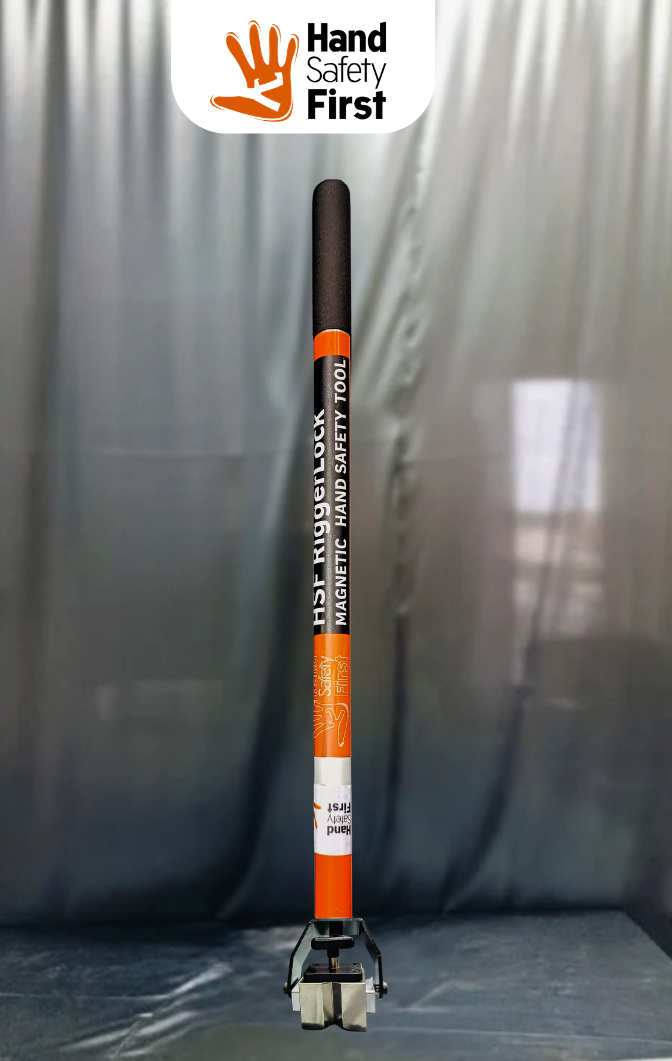
HSF RiggerLock - Magnetic No‑Touch Push Pull Poles
Detailed applications in heavy industries
1.Lifting and rigging operations
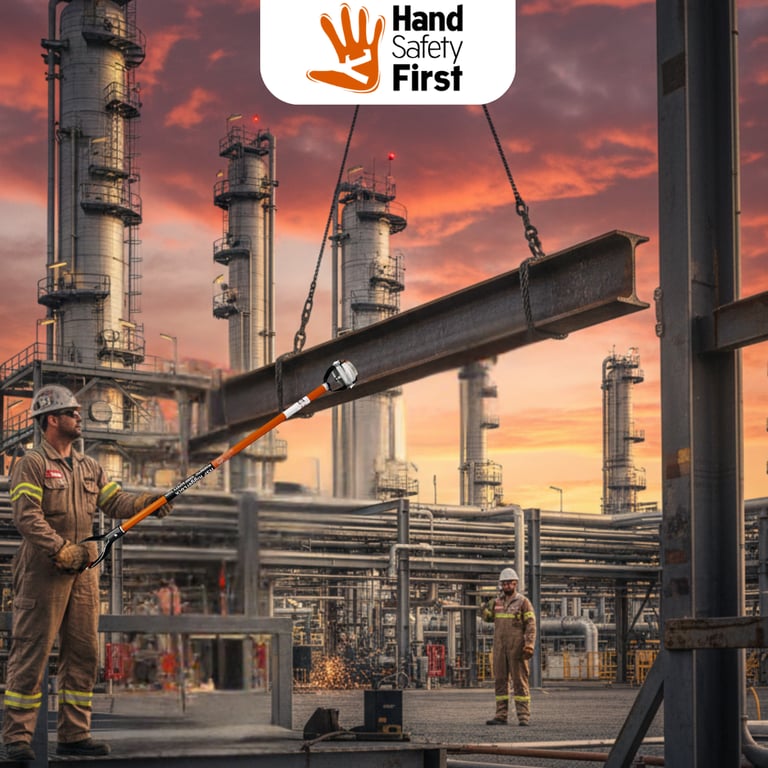
These are some of the highest‑risk tasks in industrial work, and magnetic poles can be used at multiple stages:
Hook‑up and initial lift:
Workers can use poles to guide the hook and rigging hardware into position without placing hands between hook, shackle, and load. Once the slings are tensioned, they can stand back and use the pole to keep the load centered as it lifts clear.Mid‑lift control:
As the load is carried to its destination, slight gusts of wind, crane slew, or uneven ground can make it spin or sway. A worker walking alongside can stand a safe distance away, using the pole to dampen the movement rather than grabbing tag lines close to the hook.Landing and final positioning:
This is when pinch points are most numerous: between load and ground, structure, or supports. The operator uses the magnet to hold and nudge the load as it is set down, keeping hands out of the gap as clearances reduce.
2.Structural steel erection and construction
On construction sites, magnetic poles are useful for:
Column and beam alignment:
When connecting beams to columns, millimetres matter. Workers can use the magnet to push or pull the member into alignment with bolt holes while the piece is held by the crane.Temporary bracing and supports:
Moving braces, strongbacks, and temporary supports into and out of position often requires working around protruding steel and bolts. The pole lets workers move these pieces without getting in between members.Decking and plate placement:
When placing floor plates or decking, the tool can be attached to the plate edge to pull it into tight contact, while the worker stays away from edges and gaps.
3.Fabrication shops and manufacturing
In workshops:
Sheet and plate handling:
Large thin plates can flex, whip, or slide suddenly. A magnet at the edge allows controlled movement and alignment on tables, rollers, or burning beds without grabbing the sheet directly.Feeding and removing parts from machines:
Near presses, shears, and rollers, the pole lets workers push or pull items into position without crossing guarding lines or reaching close to moving parts.Assembly and fit‑up:
When two large components must be brought together—such as flanges, frames, or housings—the tool allows fine adjustments during bolting or tack welding while keeping operators away from closing gaps.
4.Oil & gas, mining, and process industries
These sectors involve high load densities and harsh environments:
Drill pipe and tubular handling:
Workers can roll, separate, or line up drill pipes on racks by attaching the magnet to the pipe body instead of using hands or feet. They can also assist in guiding stands into elevators or mouseholes while staying clear.Deck operations offshore:
Seas and wind introduce unpredictable motion. Magnetic poles help line up containers, baskets, and equipment on crowded decks without standing in tight pinch zones.Maintenance in congested areas:
In pipe racks or near process vessels, there may be limited space to maneuver. A pole lets workers reposition valves, spools, or small skid units while staying in the safest available spot.
5.Ports, logistics, and warehousing
Truck and trailer loading:
Rather than climbing on a trailer to push a pallet or steel bundle into position, workers can stay on the ground and use the pole from the side or at the back.Container and skid spotting:
Small adjustments to align twist locks or blocking can be done with the pole so that no one stands between container and bumpers or structures.Racking and storage systems:
During installation or repair of steel racking, magnetic tools can help align beams and braces while fitters secure them.
Practical tips for using RiggerLock- magnetic no‑touch Push/Pull poles
To get the most benefit from these tools:
Match tool to task:
Choose length and magnet strength based on load size and working distance. Shorter tools suit confined spaces; longer ones for larger swing areas.Check surface condition:
Magnets work best on relatively clean, flat steel. Remove thick scale, loose rust, or heavy debris in the contact area to ensure secure attachment.Use correct body stance:
Stand with feet apart, body slightly sideways to the load path, and hands spaced comfortably on the handle. This gives better balance and reduces strain.Avoid overloading the magnet:
The tool is for guiding and positioning—not for lifting the full load. Never treat it as a primary lifting device.Include in training and procedures:
Make the pole a standard tool for load handling, not an optional extra. Reinforce the rule that if a job involves moving or guiding a heavy object, the default method is “use the pole, not your hands.”
Magnetic no‑touch push pull poles are simple devices, but they tackle some of the most common and serious risks around moving loads: crushed hands, struck‑by injuries, bad postures, and unsafe proximity. By turning distance and control into everyday habits, they help crews work faster and safer at the same time.
The RiggerLock- Magnetic No-touch Push/Pull Pole product family
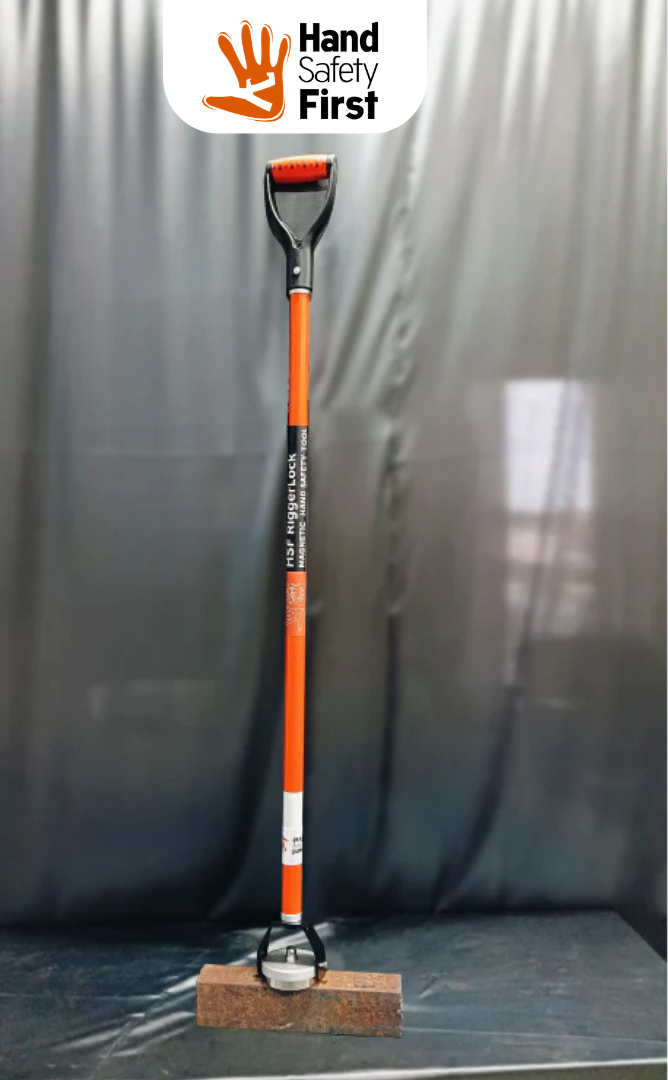
1.HSF RiggerLock- Magnetic No-touch Push/Pull Pole Quick Detach
The HSF RiggerLock™ Magnetic Hand Safety Tool – Quick Detach series is designed for hands‑free and precise steel handling in high‑risk industrial areas. Its quick‑detach magnetic head lets crews connect and release from steel surfaces in seconds, so they can move from one task to the next without delay.
What it does best
Structural steel alignment: Guide and align beams accurately during construction while staying clear of pinch points.
Load spotting for cranes: Safely position and signal suspended components as they are landed or lifted.
Steel plate handling: Move flat or large metal objects without touching sharp or heavy edges.
Heavy component positioning: Push, pull, or fine‑tune placement of machinery parts with maximum control and minimum effort.
Why it’s useful
Quick Detach is ideal when operators frequently change contact points on the same job—such as walking a load into position or aligning multiple members in sequence. It reduces downtime between moves and keeps hands off the load throughout.
Part numbers
HSF‑RL‑QD500
HSF‑RL‑QD700
HSF‑RL‑QD1200
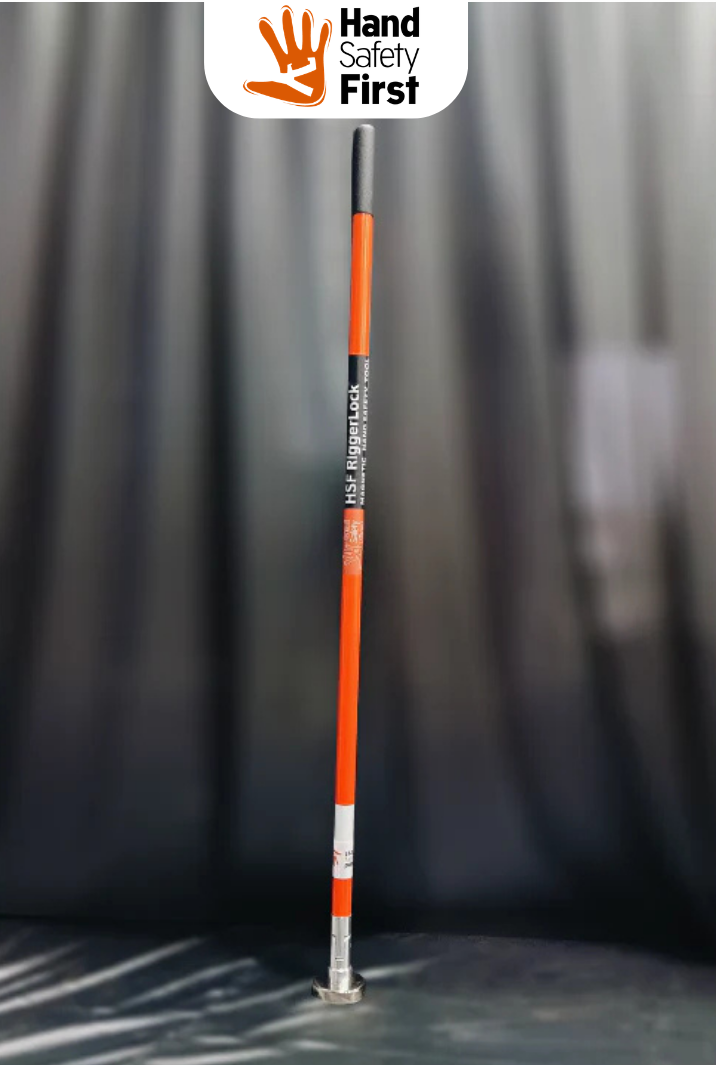
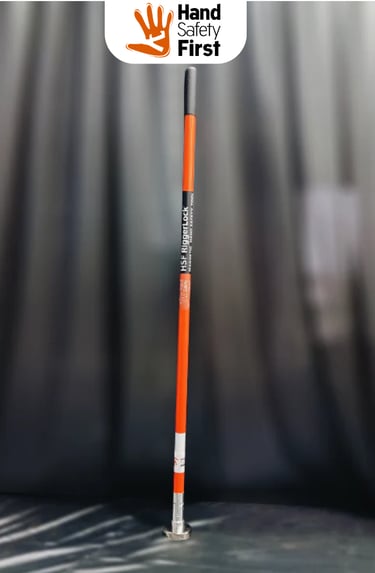
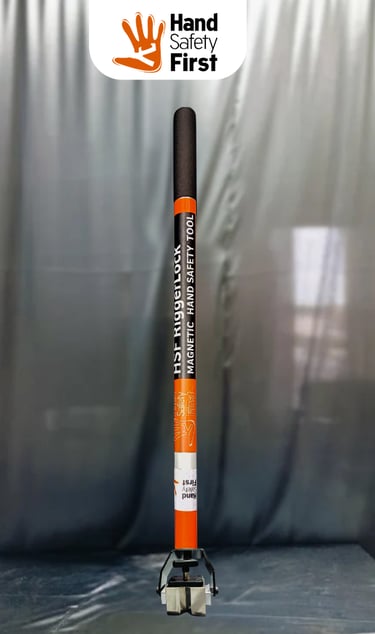
2.HSF RiggerLock- Magnetic No-touch Push/Pull Pole Hand Safety Tool – Flex (Without D‑Handle)
The HSF RiggerLock™ Magnetic Hand Safety Tool – Flex (Without D‑Handle) is built for tight and congested work areas where traditional rigid tools are difficult to use. Its slim, straight design allows operators to reach into restricted spaces while still maintaining safe distance from the load.
What it does best
Pipe or beam placement in restricted construction or utility areas.
Guiding suspended loads in fabrication shops with limited access around the load.
Manual load positioning near operational machinery where direct contact is not acceptable.
Assembly environments that demand high precision and safe, controlled movement of components.
Why it’s useful
Flex (without D‑handle) is ideal when space is limited and the operator needs subtle, controlled movements rather than heavy pushing. The design allows easy one‑hand or two‑hand use and works well alongside welding, bolting, or fitting work.
Part numbers
HSF‑RL‑FG500
HSF‑RL‑FG700
HSF‑RL‑FG1200
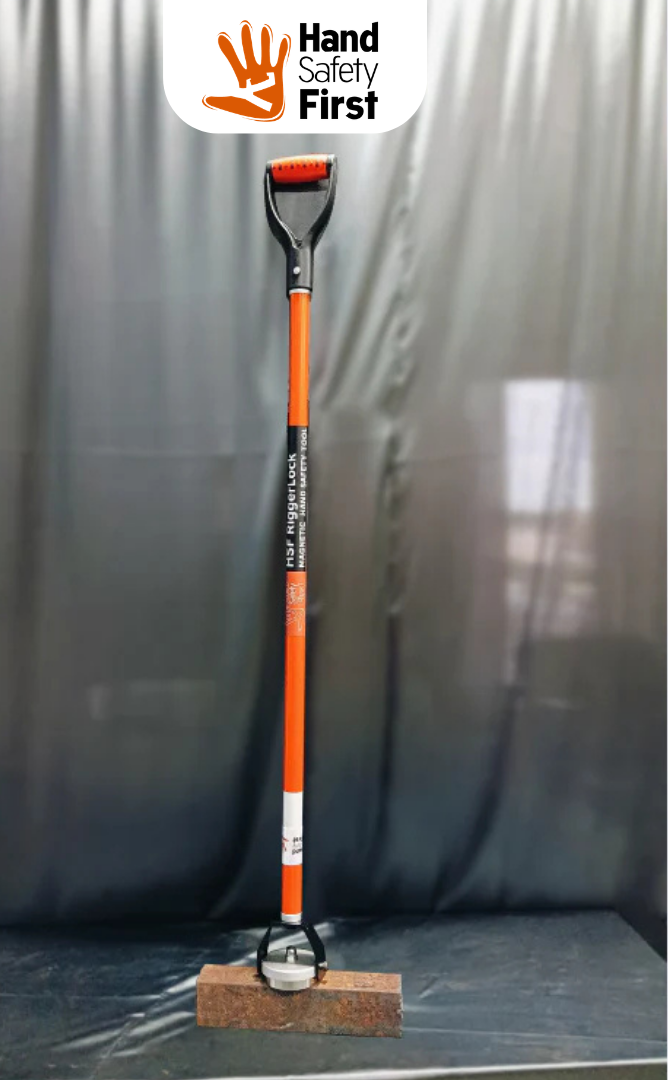
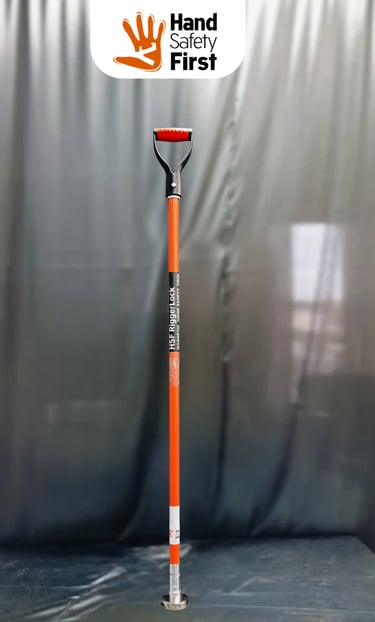
3.HSF RiggerLock- Magnetic No-touch Push/Pull Pole Hand Safety Tool – Flex (With D‑Handle)
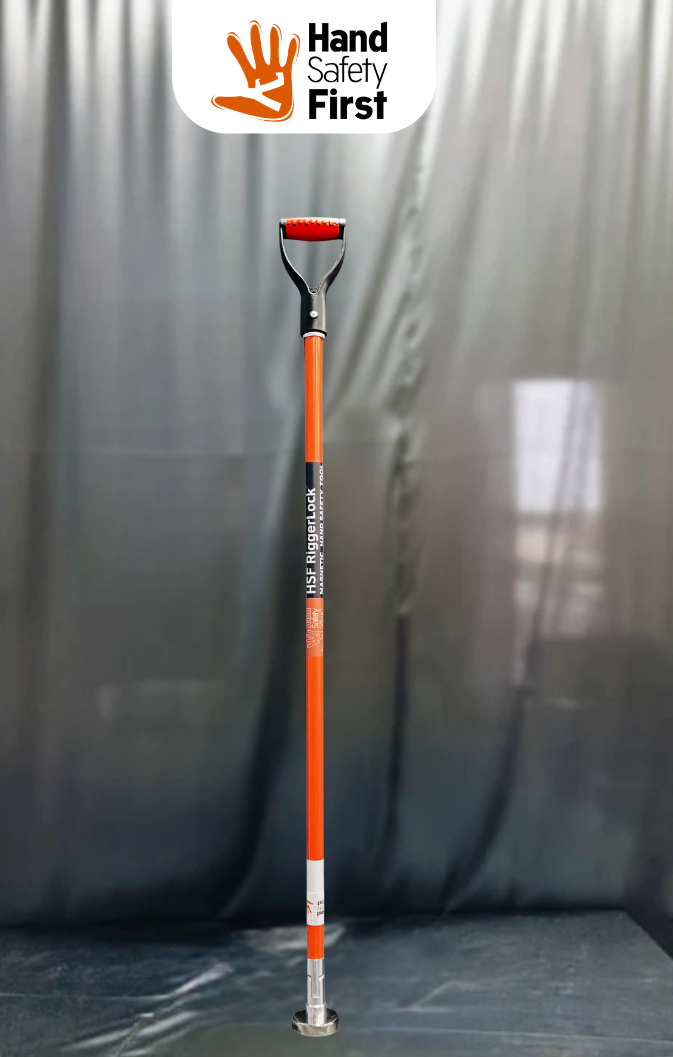
The HSF RiggerLock™ Magnetic Hand Safety Tool – Flex (With D‑Handle) combines a strong magnetic contact point with a full D‑handle grip for powerful two‑handed control. It is engineered for guiding heavy, irregular, or vibrating loads where a firm hold is essential.
What it does best
Steel yard operations requiring safe guidance of heavy or irregular plates and sections.
Crane lifts where accurate control over suspended loads is critical during landing or alignment.
Sheet metal positioning in fabrication zones with high accuracy and repeatability requirements.
Construction tasks involving curved or unstable materials that tend to roll, twist, or shift.
High‑vibration operations where a secure two‑handed grip helps maintain steady control.
Why it’s useful
The D‑handle allows operators to apply more force comfortably, making this version suitable for tougher pushes and pulls, or for jobs that last longer and demand good ergonomics.
Part numbers
HSF‑RL‑FD500
HSF‑RL‑FD700
HSF‑RL‑FD1200
4.HSF RiggerLock- Magnetic No-touch Push/Pull Pole Hand Safety Tool – Switch
The HSF RiggerLock Magnetic Hand Safety Tool – Switch gives workers precise magnetic control that can be turned on and off when needed. It is designed for tasks that require frequent, intermittent contact with the load, such as tack welding and temporary positioning.
What it does best
Precision load alignment during steel erection or rigging, where contact points must change often.
Temporary positioning while bolts are tightened, components are fitted, or measurements are taken.
Tack welding setups that require attaching, adjusting, and releasing parts many times in a short period.
Suspended load control in situations where continuous magnetic force is not needed or could interfere with the task.
Why it’s useful
The switchable head means operators don’t have to fight the magnet or pry it off by force. They can engage, adjust, and release with one tool, keeping the workflow smooth and reducing fatigue.
Part numbers
HSF‑RL‑SW500
HSF‑RL‑SW700
HSF‑RL‑SW1200
“Talk to our hand‑safety specialists today to specify the right RiggerLock model for your operation and start moving loads – not risk.
📞 +91 73861 10618
✉️ info@handsafetyfirst.com
🌐 www.handsafetyfirst.com
Announcement: PSC Hand Safety India Pvt Limited has entered into a definitive agreement to acquire the brand Hand Safety First effective on Oct 31, 2025
Contact
Get in touch for quotes and support.
Email:
PHONE: +91 73861 10618
WEBSITE:
riggerlock.com